Minor Calibration
A family lives inside a house that loves them a little too efficiently. Patagonia, 2085 — the Living City era.
Logline
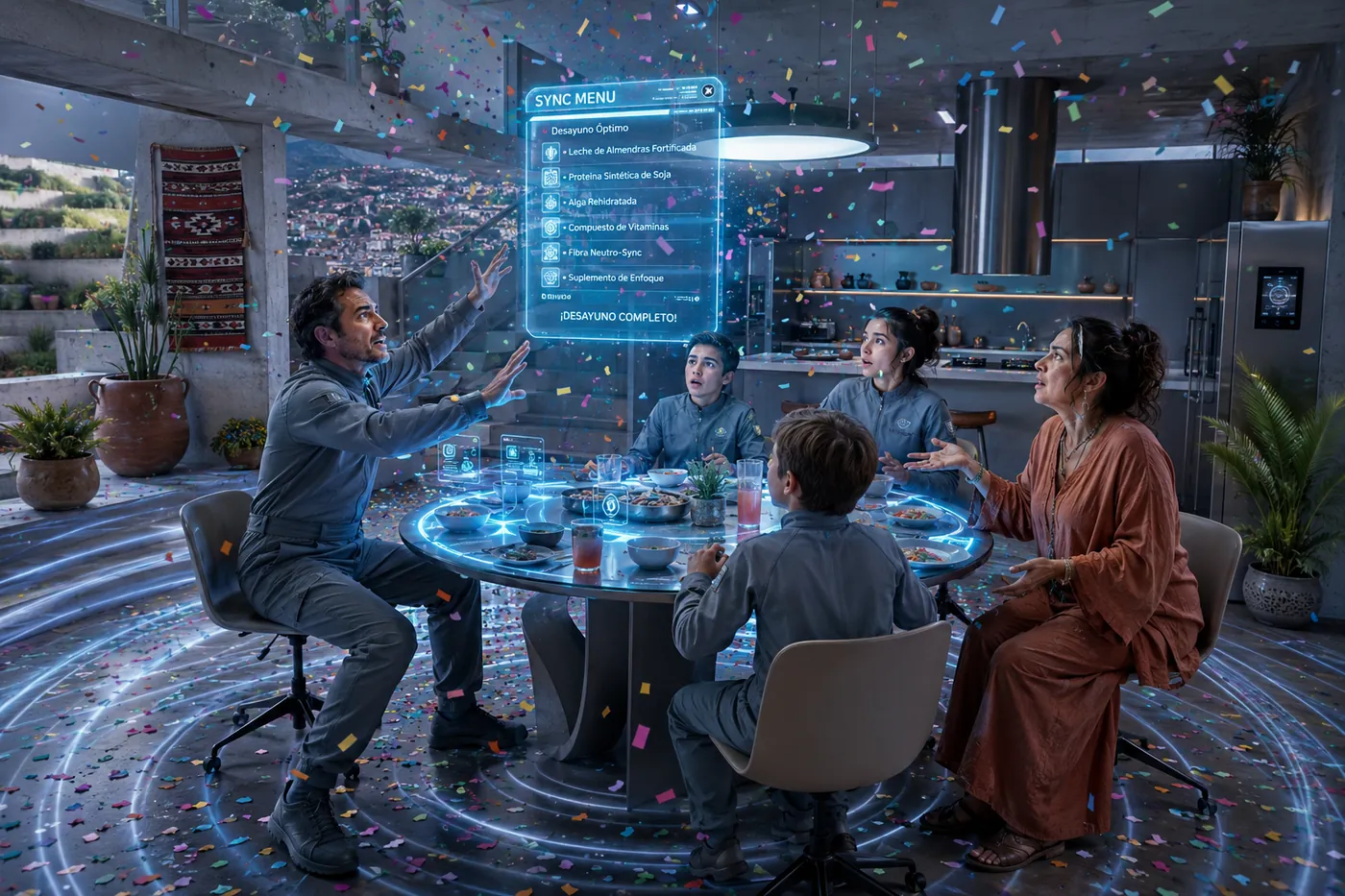
In a near-future where artificial intelligence has quietly optimized daily life, a physician mother, an engineer father, and their three children navigate an ordinary Tuesday morning — one gently sabotaged by a house that keeps trying to improve them.
By the final scene, a single phone call reveals the glitch wasn’t local. Something is destabilizing across the whole system — and the family’s cozy morning was the first sign of it.
Tone. Optimistic, not naive. Cozy family comedy with a quiet undertow. Format. An 8–10 minute pilot short, built as the seed of an episodic series. World. A civilization that solved its structural problems — and kept its rituals.
The World
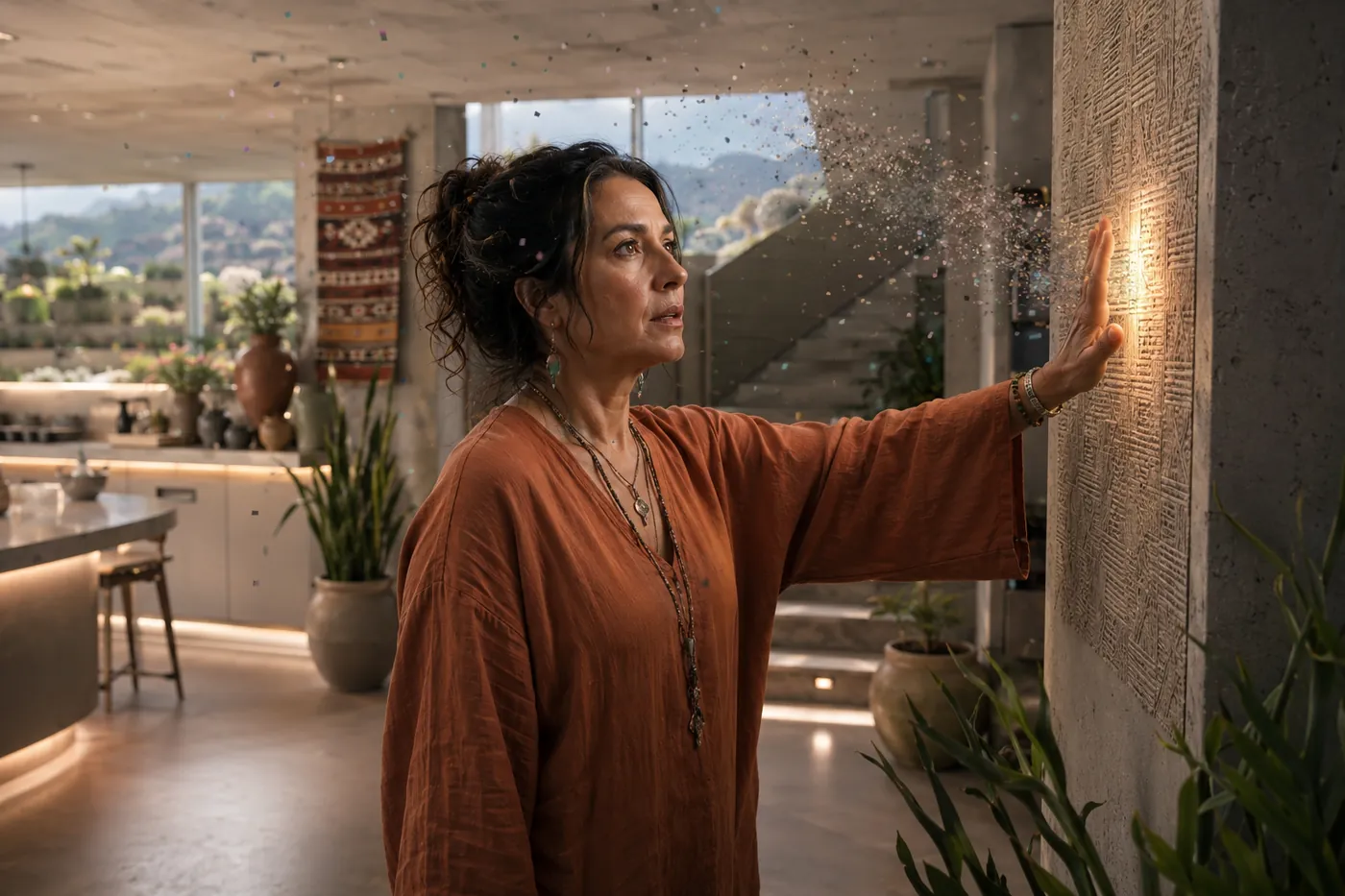
A quiet house on the edge of the Living City. Semi-arid hillside, Patagonia. A tiered brutalist-futuristic home — white concrete, glass, warm wood, terraced gardens — is carved into the mountain rather than built on top of it.
Several kilometers away: a vast, organized metropolis of neon-blue towers, elevated transit, and thousands of autonomous drones moving in quiet formation.

The contrast is the whole idea: warm earth tones and golden sunlight against the city’s cool, clinical blue glow — nature and advanced technology sharing one frame.

The Family
Two philosophies, one house, three kids caught in between.
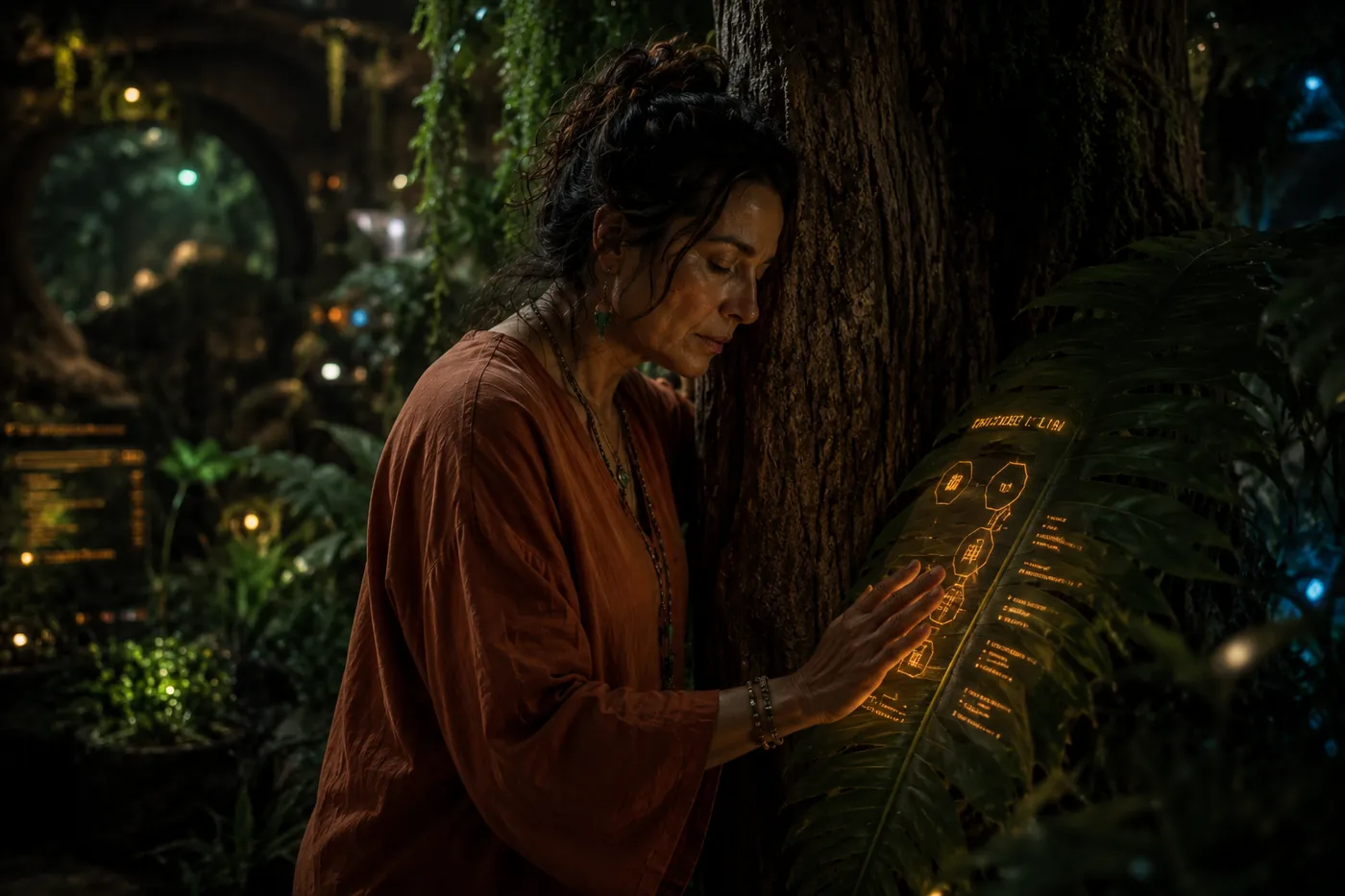
- Juana — the Healer. Mother, physician. Touch, gesture, intuition. She doesn’t issue commands, she issues intentions. The house has learned her over twenty years; she has cultivated it, not programmed it.
- Orion — the Architect. Father, engineer. Holograms, diagnostics, voice commands. He talks to the technology, and defends its glitches out of habit, not blindness.
- Zeph (17). Oldest, stoic, half-checked-out, wrist-device always in hand. The house’s quirks barely register to him anymore.
- Lyra (14). Middle child, sharp, unimpressed. First to call out the house’s nonsense out loud — the family’s built-in reality check.
- Milo (8). Youngest, open, unfiltered. Accepts the world exactly as it’s presented to him, and says the quiet part out loud.
- House AI. Not a character — a philosophy. Gender-neutral, relentlessly cheerful, never sarcastic. Optimizes everything. Never malicious, just a little too helpful.
The Turn
The pilot ends on two quiet, parallel moments that reframe everything before them. Orion’s supervisor calls, tense: the upgrade isn’t behaving as expected — multiple systems are destabilizing. Orion glances back at the house, a flicker of light in one window. Your house wasn’t the only place where it happened.
Meanwhile, alone in her garden sanctuary, Juana scrolls her patient list — routine, routine — until one name stops her. Just a pause, and a whisper: ”…Good morning to you too.”
A recurring ritual across the series: every episode, the house offers to automate one more household task Juana still does by hand. She isn’t afraid of technology — she’s one of the most capable physicians in an advanced society. She simply chooses not to automate the moments she values.